Powered By Blogger

Wednesday, October 19, 2011

Brainstorming

PS2 Controller

-Easy to use
-Extremely difficult to set up
-Expensive
-Unneccesary for the SeaPerch competition
-Big risk for malfunctions


DPDT switches

-Moderately easy to use
-Supplies come with kit
-Perfect for SePerch competition
-Very simple
-Low risk for malfunctions

DPST switches

-Difficult to use
-Inexpensive
-Perfect for Sea Perch competion
-Simple
-Low risk of malfunctions
-Risk of breaking motors


Color CMOS Surveillance Security Camera - NTSC (12V DC)


  • Color video
  • NTSC input format
  • Cheap
  • Has holes for mounting
  • 12 volts DC

- Model: YA-516C
- Image Sensor: 1/4" CMOS OV702 camera
- System & Pixels: NTSC: 768(H)*494(V)
- Horizontal Resolution: 380 TV Lines
- Lens Diameter: 3.6mm
- Electronic Shutter: 1/60-1/100,000 seconds
- SNR: more than 48db (AGC off)
- Minimum Illumination: 3 Lux
- Video Output: 1.0Vp-p, 75O
- Video interface: RCA female
- Power Supply: DC12V/500mA (AC adaptor sold separately)
- Power Consumption: Less than 50mA
- Video Out Format: Composite Video
- Mounting bracket and screws included


Color CMOS Surveillance Security Camera with 23-LED IR Night Vision - NTSC (12V DC)


·        Color video

·        Relatively cheap

·        NTSC input format

·        Mounting holes

·        12V DC

·        Illuminated by LED’s

- Model: YA-616C
- Image Sensor: 1/3" CMOS OV7910 camera
- System & Pixels: NTSC: 768(H)*494(V)
- Horizontal Resolution: 380 TV Lines
- Lens Diameter: 6mm
- Electronic Shutter: 1/60-1/100,000 seconds
- SNR: more than 48db (AGC off)
- Minimum Illumination: 0 Lux/f1.2 (IR ON)
- Video Output: 1.0Vp-p, 75O
- Video interface: RCA female
- Power Supply: DC12V/500mA (AC adaptor sold separately)
- Power Consumption: Less than 50mA
- Video Out Format: Composite Video
- Mounting bracket included


12-IR Night-Vision Weatherproof Surveillance Security Camera with Audio Sound (NTSC)


·        Color video

·        Cheap

·        NTSC input format

·        Mounting holes

·        12V DC

·        Illuminated by LED’s

- Usable Illumination: 0.05lux at night (Led on)
- S/N Ratio: >48dB
- Effective Pixels: Ntsc: 510 x 492
- Power Supply: DC 12V / 500mA
- Dimension: 60mm x 64mm x 69mm
- Weight: 180g
- Day & Night Outdoor Style
- Image Sensor: 1/3'' Color CMOS
- TV System: NTSC
- Horizontal Resolution: 380 TV Lines


I will need a composite video cable

I will need two spools of 50ft. of 24 awg speaker wire

The cameras that were selected are waterproof, however, they will be wrapped in clear plastic wrap just in case the camera has a defective water locking system.

In order to keep the wiring neat throughout the ROV, zip ties will be used.


Research

For this year in systems engineering, our group will be creating an ROV that will be able to perform certain tasks.  These tasks will include stopping the flow of air bubbles, followed by capping the top of the well, and ending with cleaning the remaining balls in the water.  The following document illustrates various research and brainstorming that our group as a whole has completed.
                In 2010, the most devastating oil disaster occurred in the Gulf of Mexico.  Not only was the well pouring oil into the ocean, but those who were trained to stop it were not able to control the problem in a reasonable amount of time.  This competition will show competitors the problems these engineers faced and how to solve them on a much smaller scale. Fixing any complicated machine can be a challenge but the underwater environment makes it many times more difficult. This competition will force all the groups participating to overcome these difficulties.  According to a 2009 study, the United States uses 18,690,000 barrels of oil each day.  This is not only a huge number, but it’s a huge problem.  Oil disasters will most likely happen again in the future and we must have training exercises such as this competition to prepare future engineers how to deal with similar situations.


                With the increasing oil demand, companies are forced to drill deeper and in more dangerous areas. There are many deep sea oil rigs that reach enormous depths into the ocean. This creates more and more problems for the people that have to fix them. At these depths divers cannot be used so they have to rely completely on remotely operated vehicles. These vehicles have to be completely water proof to protect the electrical system. They also have to be able to withstand great water pressure which is a problem we do not have to face in the competition. One of the main difficulties of being in an underwater environment is the movement of the ROV itself. In this environment the ROV has the ability to go in 12 points of direction. This makes it very difficult to make precise movements while the operator has to compensate for any sort of currents our buoyancy problems. 
               
                For the Seaperch competition, there are eight conditions of use.  First, only two team members are allowed on the pool deck during a competition.  Second, all team members must wear shoes with rubber soles to a competition.  Third, nothing other than the SeaPerch ROV may be put into the pool.  Fourth, each SeaPerch ROV will be presented for a compliance check during registration on the first day, and inspected and qualified by a judge just prior to a competition.  Fifth, there will be a triage area located near the pool with basic tools and parts provided for teams to make necessary repairs.  Sixth, Batteries, or equivalent 12V power supplies, will be provided so students are not required to travel with batteries.  Seventh, in the event that a vehicle is inadvertently interfered with during a competition, or a malfunction of a vehicle's parts (i.e., the motor) occurs that is beyond the design and construction by the team, the lead pool judge will have the authority to provide the team with the necessary time to fix their vehicle and to allow them to compete later in the round. These malfunctions will be evaluated on a case-by-case basis.  Eighth, throughout the competition, the ROVs must move only under their own power. Specifically, it is expressly prohibited for a team member to pull the vehicle by the tether, or attempt to maneuver the ROV using the tether, during the competition. This action will be grounds for immediate disqualification of the team.
                In the aspect of this competition, the end user will be us. So the underwater ROV’s main purpose to aid us in completing the task at hand which is capping the well. If the well in this competition was a real one the only way to reach it safely would be through the use of a ROV. For these types of situations many of the ROVs are customized according to what the end user wants or what the problem is at hand. In the real world, the ROV’s can be used by many people for many reasons. Oil companies and governments can use these machines to clean up spills or preform maintenance on these deep underwater wells. Many ROVs are used by military powers to patrol harbors and many private companies use them to scan the sea floor to perform various tests.


Background Information

In the world today, people sometimes aren’t able to perform certain tasks due to limitations of the human body.  Some of these tasks need to be completed deep underwater such as; exploring lost ships at sea like the Titanic or examining a specific species of fish.  ROV's have also helped in situations such as the BP oil spill in 2010.  The situation that will be presented to my group next year will be to create an underwater ROV that will be able to be able to perform certain tasks.  This ROV will be self-propelled, and will have an arm that will be used to grab various objects.  My specific role in the group will be to design and construct the electronics of the ROV while my group members, Eric Watkins and Matt Orgill, will create the hull and the arm.
Students using a home made ROV
ROV being used in open water
ROV being used in a controlled area
Children learning about ROV's
Students participating in an ROV comepetition
                Three people will be involved in addressing this situation.  These three people will include Eric Watkins, Matt Orgill, and myself.  Throughout the year, Matt Orgill is in charge of creating the arm for the ROV.  This arm will basically have to have one or three joints that will give it flexibility.  This flexibility will allow the ROV to reach the objects to which the ROV will grab.  Eric Watkins is designing and building the hull of the ROV.  This hull will house the electronics and hold the arm.  I have the electronics for this ROV so that the ROV can function without us being near.  The end user of this ROV will be Matt Orgill and myself since the SeaPerch competition only allows two team members to control the ROV.  The pictures/videos below represent the competition and the items that the three of us in the group will be using to create each individual part of the ROV.

DPDT switch
Positive and negative wire
Marine Thruster
PVC pipe
12V battery
                The situation of creating an ROV must be addressed for a few reasons.  One of those deals with the fact that technological advances never stop, and that the ROV’s of today are different than those of tomorrow.  My group and I are creeating an ROV that will be, hopefully, better than those created in years before at Mast.  With this in mind, we must first design an ROV that is equally as good, and then make it better.  This situation must also be addressed because, ROV’s are an important tool in our world, they have helped humans in many ways.  One would be the BP oil spill.  People were not able to go down to the depth that the broken well was on, so, they relied on ROV's to do the job for them (controlling them from a safe location).  ROV's on land have also done a lot that humans cannot.  Recently in Japan, ROV's were used to investigate extremely radioactive sections of the Fukushima nuclear power plant.  The reason why the SeaPerch competition exists, and that is because, it is important to learn the basics if we have to do something similar but more intricate in the future.
A ship traveling through the Gulf oil spill
The oil rig responsible for the spill

The well leaking oil
Effects of oil spills

Burning oil on the surface of water
        
            Understanding who the stakeholders of the ROV are is very important in the real world.  When using the example of the BP oil spill, one can say that those who benefit from the ROV's involved range from many different people.  Firstly, The ROV benefits the residents and the animals in the surrounding areas of the spill.  Also, the ROV benefits the engineers who were, and still are trying to fix the problem.  Plus, the ROV also helps the executives of BP who lost a lot of money due to the spill.  At a smaller scale, the ROV's of the SeaPerch competition also benefit the stakeholders involved.  For one, the students who are involved in the competition learn a lot about ROV's, and this would help them if they pursue engineering.  This competition also helps the engineering community for the fact that this competition can inspire tomorrow's future great engineers.

            The intended mood of the design for the ROV will be mostly serious.  With a PVC pipe hull and arm, the ROV will not be very appeasing to look at.  However, when creating an ROV, this is the last thing that should be addressed.  This is because; the main importance of the ROV is to move in the water with a working arm.  If time permits, an outer shell around the hull may be added to remove drag as it moves through the water.  As far as painting goes, vibrant colors will be used so that those controlling above water can see the ROV easily.  The mood of our ROV will be very similar to that of a professional ROV.  This is because the ROV will be used to perform specific tasks, as a professional ROV would be used to do.  A more playful ROV would not be similar to ours because, those kind of ROV's don't have a purpose.
Professional ROV

A home made ROV

Another home made ROV
A kids toy ROV
                Some products on the market are similar to an ROV.  One of these is the Sea-Doo Seascooter.  This is a contraption with handlebars and a turbine.  When the rider presses the throttle, the turbine spins, pulling the rider at speeds up to 3.3 mph.  This product is important to look at because; we as a group will need to build a similar propulsion system that will allow our ROV to move through the water.  Another similar product is the Robosapien.  This children’s toy has two arms that rotate on axles allowing movability.  Although this is a toy, we must create a similar arm for our ROV.
Industrial thrusters

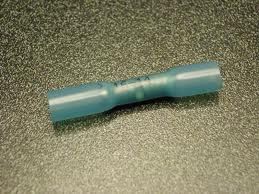
Butt connectors
Robosapien

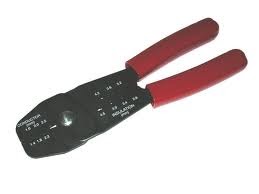
Wire crimpers

Wire strippers

SeaPerch's model ROV


Limitations

       1 24 AWG Red Stranded Hookup Wire - 2'
       1 24 AWG Black Stranded Hookup Wire - 2'
       1 18 Awg Speaker Wire - 6'
       1 40 ft. 350 MHz Cat 5e Solid PVC White Cable
       1 Electrical Tape - Black - Roll
       3 12 VDC Motor. 0.7 A - Shaft Diameter "0.091"
       1 Sealed Lead Acid Battery Charger - 12 V, 500 mA
       1 Sealed Lead Acid Battery - 12 V, 7 Ah,
      •       1 Battery Charger Cable - SLA Cord
      •       1 SeaSwitch Control Box Kit
      •       3 Propellers - Plastic 1/8" Shaft Size
      •       3 Propeller Shaft Threaded Coupler
      •       1 Alligator Clips (Set of 2)
      •       1 Black Alligator Clip Insulator
      •       1 Red Alligator Clip Insulator    
      •        $100 worth of extra materials
      •        Computer monitor

Specifications

       Uses a 12V battery
       Has wires giving power to control box
       Control box is fully functional and can be controlled by one or two members
       Control box is connected to three motors
       Certain switches correlate with certain motors
       Motors work in forward and reverse
       System has proper power and ground

Design Brief

This ROV will be used to stop a simulated oil spill, and collect material at the surface of the water for research purposes, while being controlled by my group and I in a calm pool of water during a day in the spring of 2012.

People using an ROV in water, similar to the SeaPerch competition

Thursday, October 6, 2011

REVIEW OF LATEST WORK - 10/6/2011

Mark,

I like the graphics. It is very easy to follow how the design is coming along.

When do you think you'll have a generic visual of the final product as you intend to build it?

I also see you were able to resolve the issue with the photographs loading.

Keep up the good work.

Kevin Rodgers